

Customer relations in HVAC is not just about being polite. It is about having a repeatable process that makes every homeowner feel heard, informed, and confident before the technician ever leaves the home.
Many HVAC companies assume that strong customer relationships come down to personality — that some technicians are naturally better with people and that is just how it works. But customer relations in HVAC can be trained. They can be systematized. And when they are, service calls feel more professional, documentation improves, recommendations make more sense to the homeowner, and the company builds a stronger reputation call by call.
This article walks through how HVAC technicians can build trust at every step of the service call — not by using scripts or pressure, but by following a clear, professional process that puts the customer first.
Why Customer Relations Matter in HVAC
A homeowner does not usually know whether a technician performed a perfect combustion analysis or diagnosed a refrigerant issue correctly. But every homeowner notices how the technician made them feel.
Did the technician explain what they were doing? Did they answer questions without rushing? Did they show pictures or findings? Did they give the homeowner options instead of just telling them what to do?
These are the moments where customer trust is either built or lost. And trust is the foundation of every future recommendation — whether it is a repair, a maintenance agreement, an IAQ solution, or a replacement conversation.
When customer relations in HVAC are strong, homeowners are more likely to approve work, leave positive reviews, refer friends and family, and call the same company again next time.
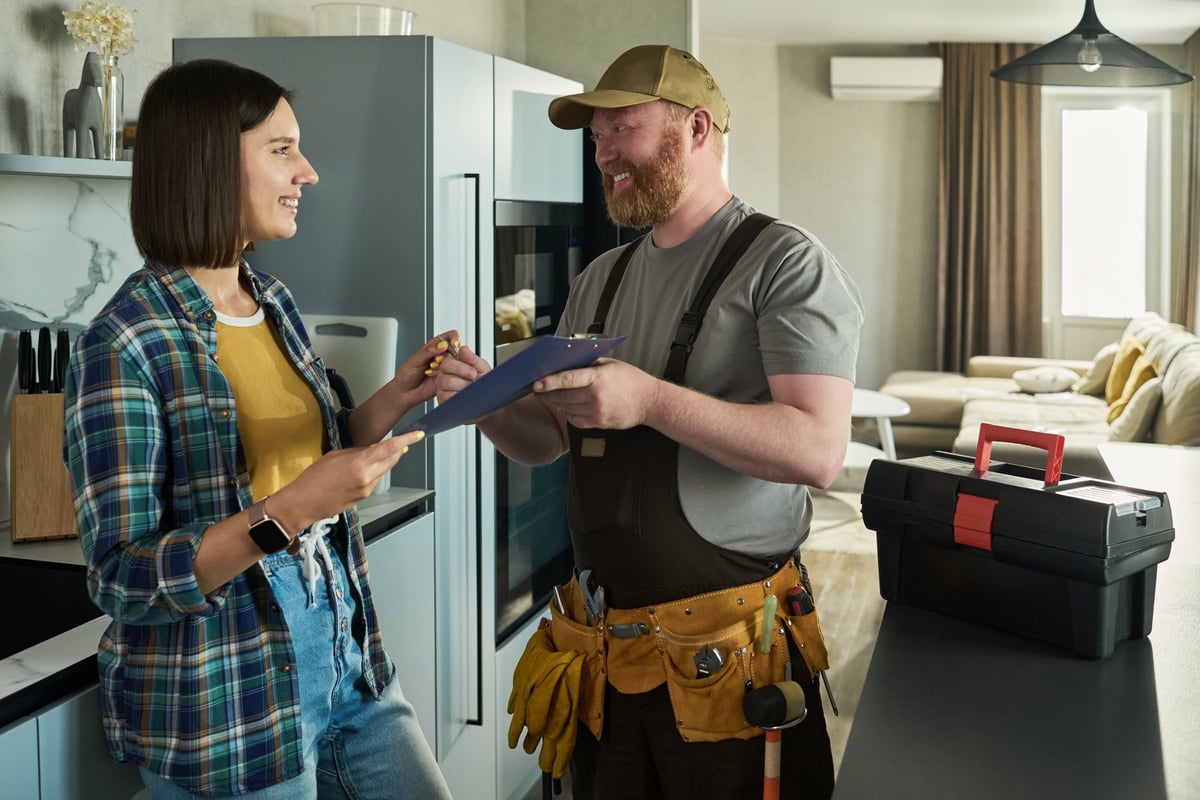
Customer Relations Start Before the Technician Arrives
The customer experience does not begin when the technician rings the doorbell. It begins with the confirmation call, the dispatch communication, and the information the technician reviews before pulling up to the home.
A technician who takes 30 seconds to review the call notes — previous invoices, system age, past recommendations, or unresolved comfort concerns — walks in with context. That small preparation step shows the homeowner that the company is organized and that the technician is not starting from zero.
On the other hand, a technician who shows up asking "so what's going on with the system?" without having reviewed anything tells the homeowner that no one passed along the information. That erodes trust before the diagnostic even starts.
The First Five Minutes Can Shape the Entire Call
The way a technician introduces themselves, greets the homeowner, and sets the tone for the visit matters more than most people realize.
A simple, professional greeting goes a long way: introducing yourself by name, confirming why you are there, and letting the homeowner know what to expect before heading to the equipment.
Then, asking a few discovery questions before touching the system can change the entire call. Questions like:
- What have you noticed with the system lately?
- Are there any rooms that feel less comfortable than others?
- Has anything changed since the last visit?
- Is there anything you have been wondering about with your HVAC system?
These questions do two things. They help the technician understand the full picture before diagnosing. And they tell the homeowner that the technician actually cares about their experience — not just the equipment.
Clear Communication Builds Customer Confidence
One of the most common complaints homeowners have after an HVAC service call is that they did not fully understand what the technician told them.
Technicians live in a world of superheat, subcooling, static pressure, and delta T. Homeowners do not. When a technician explains a finding using only technical terms, the homeowner may nod along but walk away confused — and a confused customer rarely says yes to a recommendation.
Better HVAC technician communication means explaining findings in simple language. Instead of saying "your evaporator coil has a restriction and your superheat is high," a technician might say, "the part of your system that removes heat from the air is not working properly, and that is why your home is not cooling evenly. Here is what I recommend and why."
Technicians who learn to translate technical findings into plain language build more trust and present options with more clarity. That is a core HVAC soft skill that can be trained.

Professionalism Is Part of the Repair
Homeowners notice small things: whether the technician wore shoe covers, whether they cleaned up after the work, whether they took the time to explain the invoice, and whether they left the home the way they found it.
These details are not optional extras. They are part of HVAC technician professionalism, and they directly affect how the customer remembers the experience.
A technician who treats the home with respect communicates something important: this company cares about quality, detail, and the customer experience — not just getting to the next call.
Better Customer Relations Lead to Better Recommendations
When a technician has built trust throughout the call — by arriving prepared, listening to the homeowner, communicating clearly, and showing documentation — the recommendation conversation becomes much easier.
At that point, the homeowner is not being asked to trust a stranger. They are being asked to consider a recommendation from someone who has already demonstrated professionalism, knowledge, and respect for their home.
This is where options should be presented clearly. Must-do repairs. Should-do maintenance. Could-do upgrades. The technician should explain what was found, what it means, and what the homeowner should consider — without pressure, without fear, and without rushing.
Giving the homeowner options and letting them make an informed decision is not avoiding sales. It is practicing customer relations in HVAC at the highest level.
The Problem: Most HVAC Companies Leave This to Chance
Most HVAC companies do not have a system for training technicians on customer relations. They hire for technical skill, hope for good communication, and then wonder why some technicians build trust while others create friction.
When customer relations are left to personality, the company has no standard. One technician greets the homeowner, asks great discovery questions, documents findings thoroughly, and presents options professionally. Another technician walks in, goes straight to the equipment, says three words, and hands over an invoice.
Both technicians may be good at diagnostics. But only one is building a long-term customer relationship for the company.
How to Train HVAC Technicians for Better Customer Relations
The good news is that HVAC customer service training does not have to be complicated. It starts with giving technicians a clear, repeatable service call process they can follow from the first interaction to the final wrap-up.
Training for better customer relations in HVAC should include:
- Pre-arrival preparation: reviewing call notes, system history, and any previous recommendations before arriving
- Professional arrival and greeting: how to introduce yourself, confirm the visit purpose, and set the homeowner at ease
- Discovery and listening: asking the homeowner what they have noticed, what concerns they have, and what matters most to them
- Clear communication during diagnosis: explaining what you are checking and why, in language the homeowner can follow
- Visual documentation: taking photos of findings and showing the homeowner what you are seeing
- Option presentation without pressure: organizing recommendations into clear categories and allowing the homeowner to make an informed decision
- Professional wrap-up: summarizing the visit, confirming the next step, answering final questions, and leaving the home the way you found it
When technicians are trained on every part of this process — not just the technical diagnosis — customer relations become consistent across the whole team.
Common Questions About Customer Relations in HVAC
What are customer relations in HVAC?
Customer relations in HVAC refers to how HVAC technicians and companies interact with homeowners during service calls. It includes communication, professionalism, trust-building, documentation, and the overall customer experience from pre-arrival through final wrap-up.
Why do customer relations matter in HVAC?
Strong customer relations lead to better trust, higher approval rates on recommendations, more positive reviews, more referrals, and better long-term customer retention. Homeowners who feel informed and respected are more likely to approve work and call the same company again.
Can HVAC technicians be trained on customer relations?
Yes. HVAC customer service training can help technicians learn how to communicate clearly, ask better discovery questions, document findings visually, present options without pressure, and close each call professionally. These are HVAC soft skills that improve with training and a repeatable process.
What is the most important part of customer relations during an HVAC service call?
There is not one single most important part — customer trust is built across the entire call. Strong pre-arrival preparation, a professional greeting, good discovery questions, clear communication, visual documentation, and a professional option presentation all contribute to a positive customer experience.
Final Thoughts: Customer Relations Are a System
Customer relations in HVAC should not depend on which technician shows up that day. It should be a system — a repeatable service call process that every technician follows, every manager can coach to, and every homeowner can count on.
When HVAC technicians are trained on pre-arrival preparation, professional greetings, discovery questions, clear communication, documentation, ethical option presentation, and final wrap-up, the entire company benefits.
Better calls. More consistent customer experiences. Stronger reviews. Cleaner recommendations. And technicians who feel more confident leading the call from start to finish.
A Practical System for Better Customer Relations in HVAC
If you want a simple framework for improving technician communication, professionalism, and the full HVAC service call process, TechTrainer HVAC: The Perfect Service Call Framework gives managers and technicians a practical system they can use with their team.